How to name the places on a fantasy map
Names make a map feel inhabited. The names that convince are consistent within a culture and layered over time, like the ones on a real map.
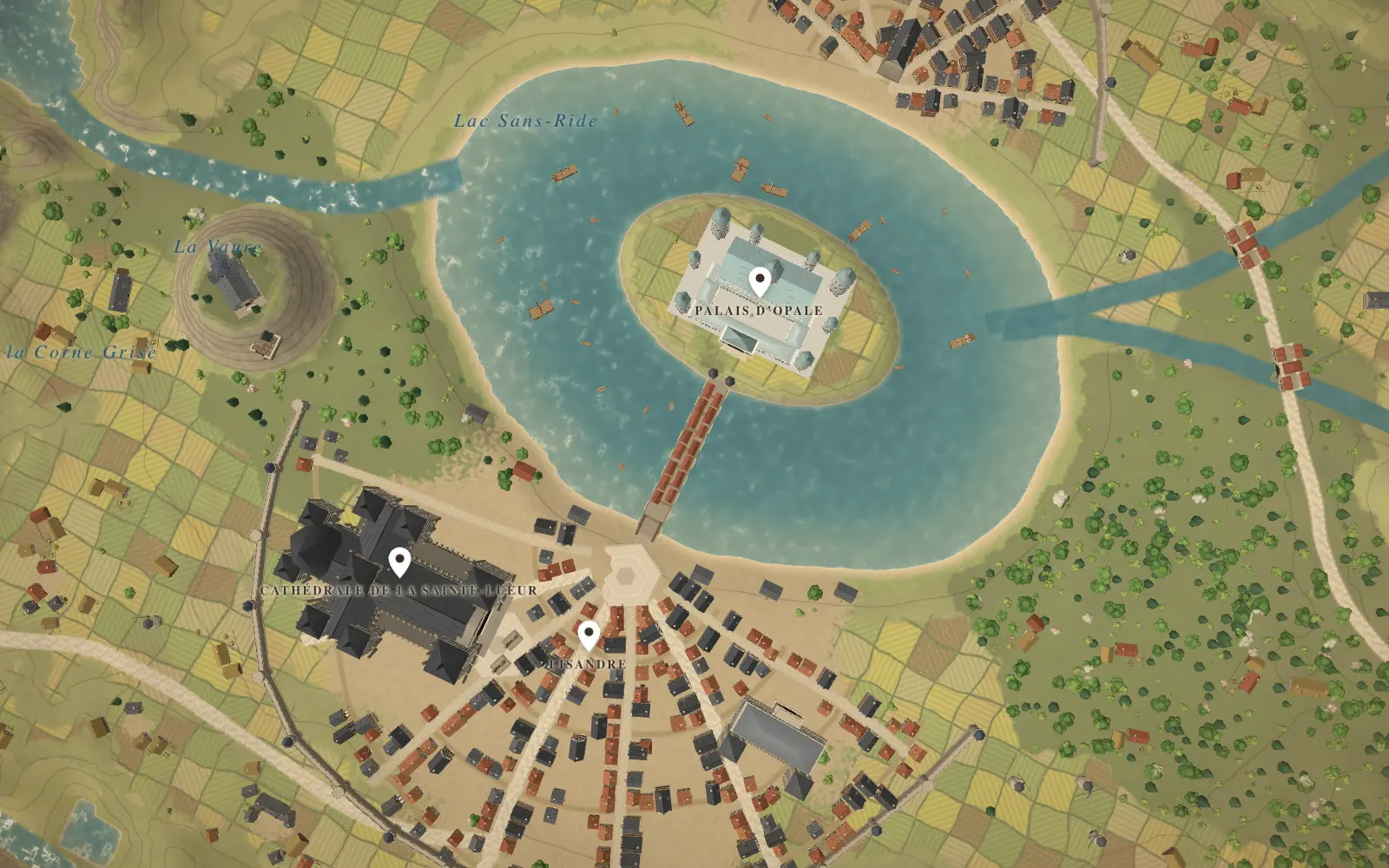
Give each culture a sound
Choose a few sounds for each people: favourite consonants, vowel patterns, endings. Write them as a short list. A people who end place names in -ar and -en will sound different from one who prefers -ost and -heim. When you invent a new name, check it against the list.
Three to five endings per culture is plenty. The aim is a family resemblance, not a code.
Look at how real names are built
Real place names are mostly descriptions that eroded over time. In England, many endings are old words: -ford is a river crossing, -ton comes from an Old English word for a farm or enclosure, -ham is a homestead, -mouth is where a river meets the sea, and -by is a Norse word for a farm or village. In French, -ville goes back to the Latin villa, a rural estate, and Saint- names a parish dedicated to a saint.
You can borrow the method without borrowing the words. Name a town after what it was, a ford, a wall or a market, and let the root of that word change slowly.
Layer names over time
Real places carry several names. York began as the Roman Eboracum, became Eoforwic in Old English and Jórvík under Norse rule, and shortened to York. If a city in your world changed hands, give it an older name, a conqueror’s name and the name in use today. Characters can disagree about which one to use, and that tells the reader something about them.
Describe the land
Many of the most memorable names are plain descriptions: Blackwater, Highmoor, the Salt Road, the Wolf’s Teeth. A good test is whether a character could explain the name in one sentence.
Common traps
- Apostrophes and unpronounceable clusters. If a reader cannot say the name, they will skip it.
- Names that look too alike. Aldor, Aldar and Aldren will be confused. Vary the first letter and the length.
- One style for the whole world. A single sound set makes every culture feel the same.
- Accidental real names. Search a name before you commit, in case it is a real town or a brand.
- Too many names. Name what the story visits, and name the rest later.
Keep a list
Keep one table of names with their culture, meaning and first appearance. It prevents the classic error of using two spellings. Worldbuilding cards can hold this information next to the place.
Names in Mapella
Mapella does not invent place names. It places the names you give it or the ones it reads in your manuscript, so the vocabulary of your world stays yours. If you want a method to invent them, the steps above are one.
Questions
- Should I use a name generator?
- A generator can give you raw material. Check each result against your culture’s list of sounds, and change it until it fits.
- How long should place names be?
- Short names are easier to remember. Two or three syllables suit most places, and longer forms can be kept for formal titles.